About Jamia Hamdard
Introduction
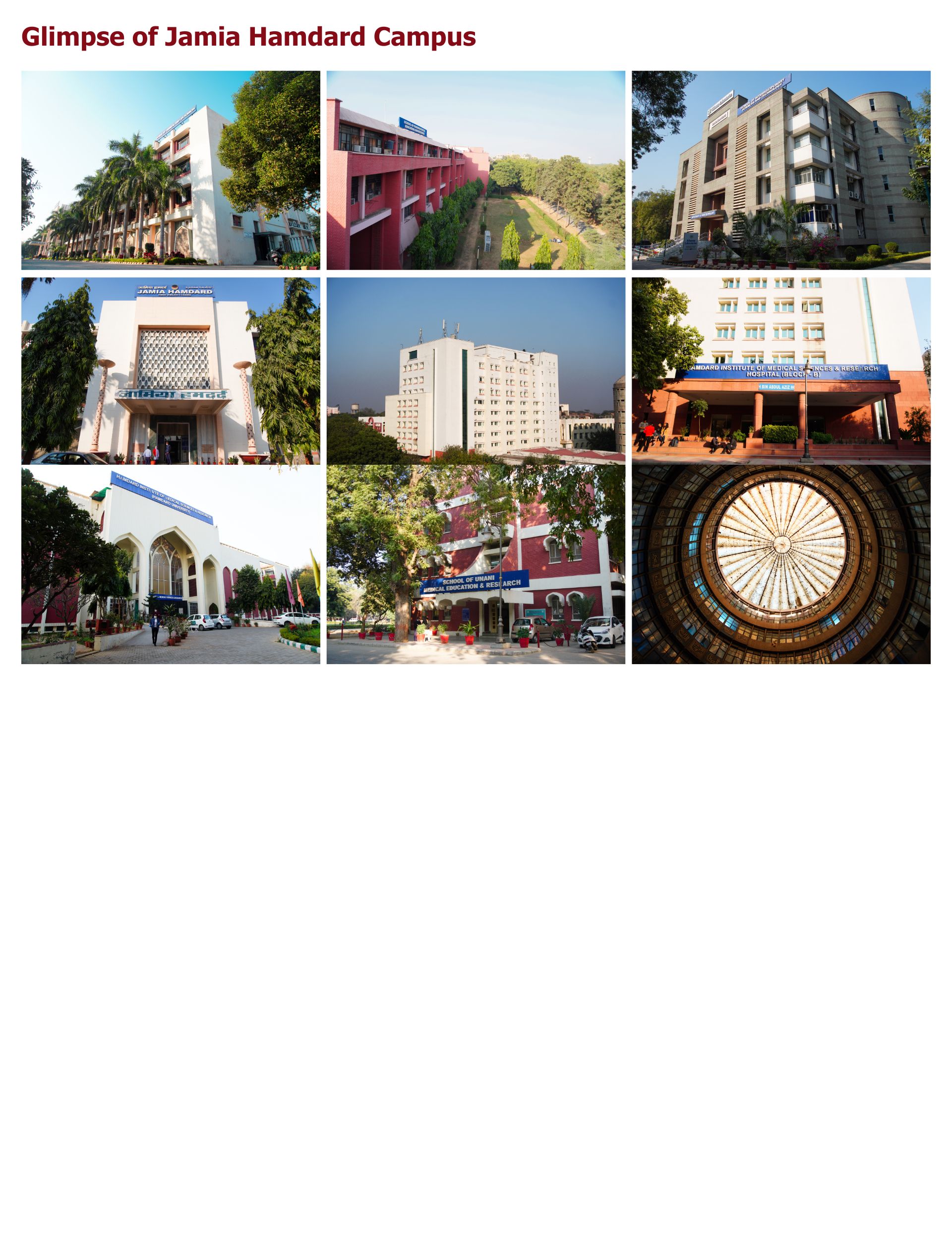
Jamia Hamdard is one of India’s leading institutions of higher education, renowned for its excellence in education, research, healthcare, and innovation. The university traces its origins to 1906, when Hakeem Hafiz Abdul Majeed, a distinguished practitioner of the Unani system of medicine, established a small Unani clinic with the vision of transforming traditional medicine into a scientifically advanced discipline. He named the initiative “Hamdard,” meaning “sympathy for all and sharing of pain.”
Following India’s independence, his son Hakeem Abdul Hameed expanded this vision by establishing a center of higher learning dedicated to quality education, research, and the advancement of traditional and modern healthcare systems. Today, Jamia Hamdard is recognized as a premier institution committed to academic excellence and societal development.
Vision
To provide internationally recognized higher education and conduct cutting-edge research in the fields of social sciences, natural sciences, technology, and healthcare. The university is committed to promoting both modern and traditional systems of medicine, particularly Unani-Tibb, through a holistic and integrated approach while addressing the educational and healthcare needs of underprivileged communities.
Mission
-
Promote excellence in higher education through innovative teaching methodologies and advanced research across diverse disciplines.
-
Develop academic programs that address emerging national and global challenges while serving society.
-
Encourage interdisciplinary research and innovation with a focus on healthcare, science, technology, and social development.
-
Collaborate with national and international universities, research organizations, and institutions to enhance academic and research excellence.
-
Provide quality undergraduate, postgraduate, and doctoral education that nurtures knowledge, leadership, ethics, and professional competence.
-
Preserve and promote the rich heritage of Unani Medicine while integrating it with modern scientific research for improved healthcare outcomes.
-
Contribute to the educational empowerment and overall development of underprivileged communities through inclusive and accessible education.
Course Features
- Lectures 0
- Quizzes 0
- Duration 10 weeks
- Skill level All levels
- Students 0
- Assessments Yes